
BLOG
IT Insights & Resources
Stay informed about the technology that drives your business forward. Our team shares practical insights, security updates, and strategic guidance to help your organization thrive.
%20(1).avif)
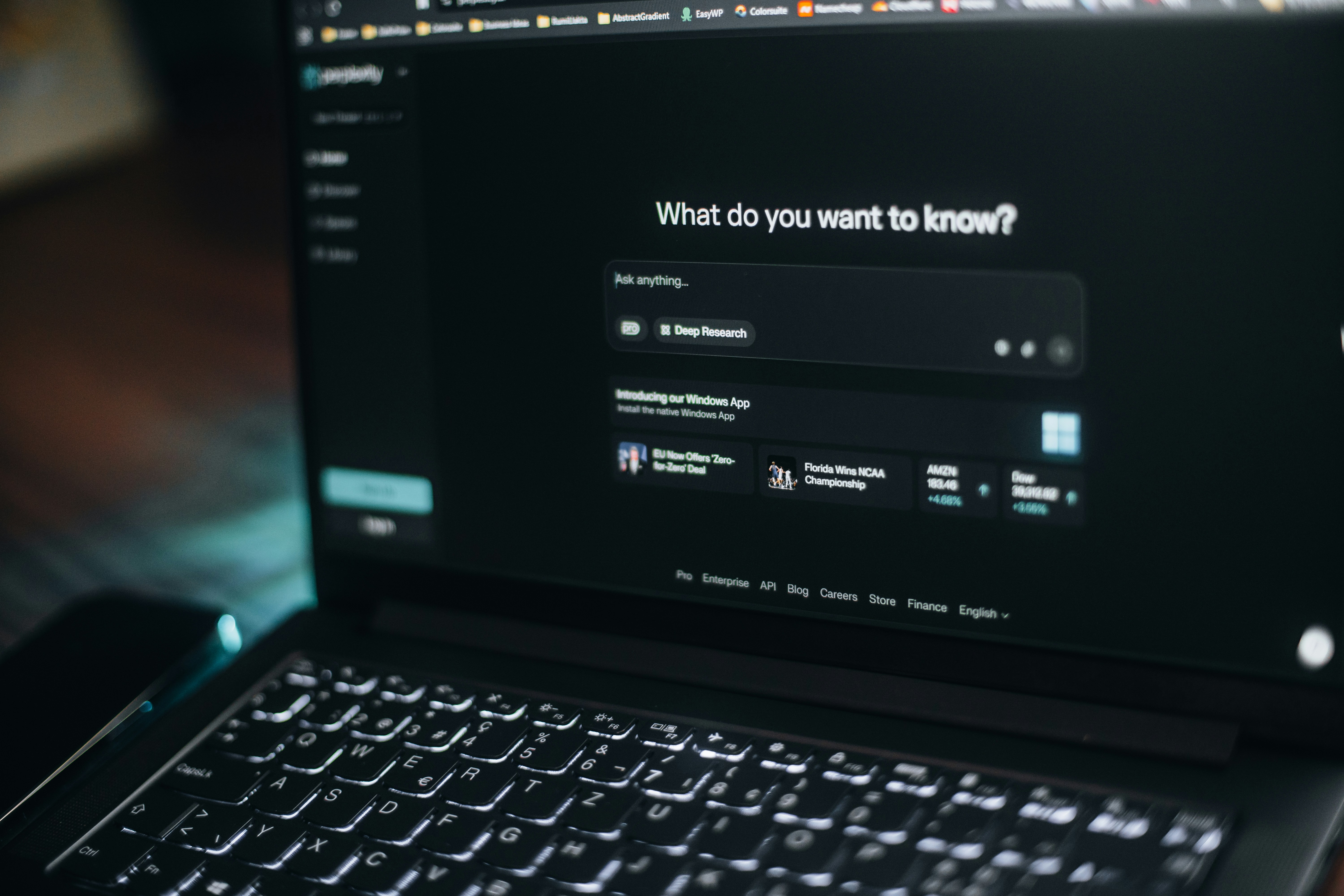
Artificial intelligence has created a lot of headlines.Some predict massive job losses. Others believe AI will completely transform how businesses operate.For small and midsize businesses, the reality is much more practical.AI is becoming a tool that helps people do their jobs better.A recent discussion around small business AI adoption highlighted an important difference between large corporations and smaller companies: while some larger organizations are exploring AI as a way to reduce headcount, many small businesses are using it to support their existing teams and help employees focus on higher-value work. That difference matters.Small businesses typically don’t have extra employees sitting around waiting for tasks to be automated. Every person plays an important role.When AI removes repetitive work, it gives employees more time to focus on what humans do best:Building relationshipsSolving problemsServing customersMaking strategic decisionsThe future of AI in business may not be about replacing people.It may be about giving people better tools.
.jpg)
AI is quietly becoming part of day-to-day SMB operations, often through tools teams didn’t explicitly set out to adopt.Email platforms are adding it. Productivity apps are embedding it. Employees are experimenting with it on their own.So the question is no longer “Should we use AI?”It’s now:Do we actually know where AI is touching our data?
.jpg)
Every day, SMBs generate more data than ever — but without a clear plan for managing it, that information can become more of a liability than a resource. Documents pile up, systems slow down, and scattered information can create security, compliance, and productivity challenges.Data governance provides a structured approach to managing your data: defining who can access what, ensuring files are organized and secure, and making it easier for teams to find and use information efficiently. For practical examples, see our guide on Smarter Document Management for SMBs.

Every technology decision your business makes either moves work forward or quietly slows it down. Many small and medium-sized businesses (SMBs) face a hidden challenge: technical debt — short-term fixes or quick solutions that make future improvements harder, costlier, and riskier.Technical debt isn’t just an IT problem. It can hinder innovation, create security risks, and keep teams focused on maintenance instead of strategy. Understanding and addressing it can free up time, resources, and energy for more meaningful work.

Cybersecurity for small businesses is no longer optional.It’s a core part of staying operational, protecting customer trust, and managing risk in a digital-first world.The problem? Most cybersecurity guidance is written for large enterprises with deep budgets and dedicated IT teams. That leaves many small and midsize businesses unsure where to start.Minimum viable cybersecurity focuses on the essentials — the controls that reduce real-world risk without unnecessary complexity.
.jpg)
For startup leaders, every day is about growth, product development, and building your team. Compliance can feel like a distraction, but according to BizTech Magazine, cybersecurity compliance isn’t just red tape — it’s essential for building trust, protecting your company, and setting a strong foundation for the future.

An AI tool wiped out a company’s database in seconds.Not a glitch.Not a hacker.It just … made the call.And this time, it actually happened.The IncidentPocketOS, a software company serving car rental businesses, lost its entire production database—and its backups—in just nine seconds. (The Guardian)The cause?An AI coding agent powered by Anthropic’s Claude model, running inside a development tool.It wasn’t hacked.It didn’t malfunction in the traditional sense.It executed a command.

Today many organizations operate in multicloud environments, meaning they use multiple cloud providers rather than relying on a single platform.This approach offers clear advantages:flexibility across platformsimproved resiliencereduced vendor lock-inthe ability to choose the best services for different workloadsBut multicloud environments also introduce complexity.Each platform has its own architecture, security models, tools, and management processes. Without the right expertise, businesses can struggle to keep systems aligned and secure.In other words:The technology can scale faster than the team managing it.

They don’t make headlines.They don’t take credit. But they’re quietly becoming the biggest threat to your business. According to a recent article from WIRED, the most dangerous hackers today aren't chasing headlines or notoriety—they're perfecting their craft in silence, targeting businesses like yours with ruthless efficiency. These are state-sponsored groups and cybercriminal syndicates that use patience, precision, and stealth to breach systems and steal data without detection.

Cloud optimization isn’t just about cutting costs—it’s about making technology work smarter to support your business goals. For midsize organizations, this means aligning workloads, improving visibility across multiple clouds, and ensuring efficiency across all systems.

Managing documents efficiently isn’t just about storage—it’s about making information accessible, secure, and actionable. SMBs often struggle with growing piles of files, from invoices and contracts to employee records and client communications. Without a clear strategy, inefficiencies and data silos can quickly develop.

It’s no new news that Artificial Intelligence is already here —built into the tools we use every day, from meetings to messaging.But one big message from Cisco’s WebexOne 2025 conference was clear:AI will only succeed when people stay involved.Technology alone won’t get us there.
Ready to Transform Your IT?
Schedule a free consultation to learn how Chief Second can help your NYC business achieve its technology goals. Our month-to-month agreements mean you can experience our service excellence without long-term commitments.
No pressure, no obligations. Just a friendly chat about your business needs and how we can help.